Course description

Mastering practical French grammar means focusing on the core building blocks used for everyday conversation and writing. Instead of getting bogged down by obscure tenses, prioritize these four foundational pillars to communicate effectively. [1]

What will I learn?

  • Functional Speaking & ListeningReal-world conversation: Ability to handle social interactions, such as asking for directions, ordering food, or discussing personal interests.Verb mastery: Correctly applying and interchanging verb tenses (Present, Passé Composé, Imparfait, and Futur Simple) to narrate events.Pronunciation and flow: Producing comprehensible French sounds and utilizing proper sentence intonation so that you can be easily understood by native speakers
  • Reading & ComprehensionMain idea extraction: Grasping the core message of short texts, emails, or everyday conversations without translating word-for-word.Contextual inferences: Differentiating between word categories (nouns, adjectives, pronouns) to understand meaning from context clues.Grammar in the wild: Correctly interpreting articles and adjectives that denote gender, plurality, and possession
  • Writing & Practical ApplicationAccurate communication: Writing cohesive messages (emails, notes, or short stories) using accurate subject-verb agreement.Structural building blocks: Understanding word-formation (morphology) and syntax to adjust the tone of your communication (formal vs. informal)

Requirements

  • Internet
  • Laptop/Desktop

Frequently Asked Question

French uses three main ways to ask a question, ranging from informal to formal:Informal (Rising Intonation): Just state the sentence and raise your pitch at the end.Ex: Tu manges ? (Are you eating?)Standard (Est-ce que): Add est-ce que (literally "is it that") to the beginning of the statement.Ex: Est-ce que tu manges ? (Do you eat?)Formal (Inversion): Flip the subject pronoun and the verb, connecting them with a hyphen.Ex: Manges-tu ? (Do you eat?)Question Words: To ask who, what, where, or when, simply place the question word (où, quand, comment, combien) before est-ce que or the inverted verb.Ex: Où est-ce que tu vas ? or Où vas-tu ? (Where are you going?)

French has no foolproof rule, but there are strong patterns based on word endings:Commonly Masculine: Words ending in consonants, -age, -eau, -ment, and -isme.Commonly Feminine: Words ending in a silent -e, -tion, -sion, -té, -ance, and -ence.Tip: Always learn a new noun with its article (un for masculine, une for feminine) to cement its gender in your memory.

Both are past tenses, but they serve different purposes:Passé Composé: Used for completed, specific actions that happened at a definite time or interrupted a background story.Ex: J'ai mangé une pomme. (I ate an apple.)Imparfait: Used for ongoing background states, descriptions, habitual actions, or telling time in the past.Ex: Je mangeais une pomme quand... (I was eating an apple when...)

Most verbs use avoir. However, you must use être with reflexive verbs and 14 special "movement" verbs (often remembered using the "Dr. & Mrs. Vandertramp" mnemonic, which include verbs like aller, venir, partir, and tomber). When using être, the past participle must agree in gender and number with the subject (e.g., Elle est arrivée)

The subjunctive mood is used to express necessity, emotion, doubt, or subjective opinions. It typically follows a clause containing the word que (e.g., Il faut que... - It is necessary that...) and applies a different set of endings than the standard present tense.

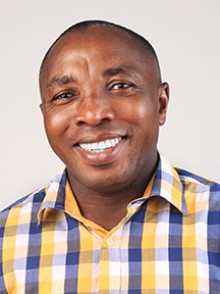
Watt Fiedin Adams

I am a Ghanaian businessman living in Accra and father to Godstime Watt Fiedin. I am very passionate about Entrepreneurship and aim at creating jobs for the youth. I like teaching and creating teaching contents for others to use. Jesus is my Mentor and Inspiration.

I am a Ghanaian/American businessman living in Accra and father to Godstime Watt Fiedin.I am very passionate about Entrepreneurship and aim at creating jobs for the youth.I like teaching and creating teaching contents for others to use.Jesus is my Mentor and Inspiration. - 18 years of teaching experience in French Language.- 3 years in Economic Business- 3 years Certified Interpreter/Translator, World Vision International, Ghana, West Africa Region & Global Center- 2 years Certified Translator, HIPPO Transport Ltd.- 3 years of French/English book Authorship.- 1 year as President of the Online Linguistics Trainers Association, Ghana.- 3 years as Chief Executive Officer, WATT Group of Companies- Director, WATT E-School of Languages- President, Online Linguistics Trainers Association, Ghana- President, WATT Xpress Ltd.- Co-founder, Gallery Products Ghana Ltd.- CEO, WATT Publications Ltd.- Interpreter, Lausanne Movement- Co-founder, WATT E-School- C. E. O. / Founder - WATT Professional Studies LLC- Test Administrator (PSI & Pearson VUE)
Free

Lectures

4

Skill level

Beginner

Expiry period

12 Months

Certificate

Yes

Related courses